“They Planted Roots”: cityLAB-UCLA Celebrates 20 Years of Shaping Los Angeles
Oct 27, 2026
October 12 event marked two decades of research translated into action and solutions, alongside a new chapter of leadership
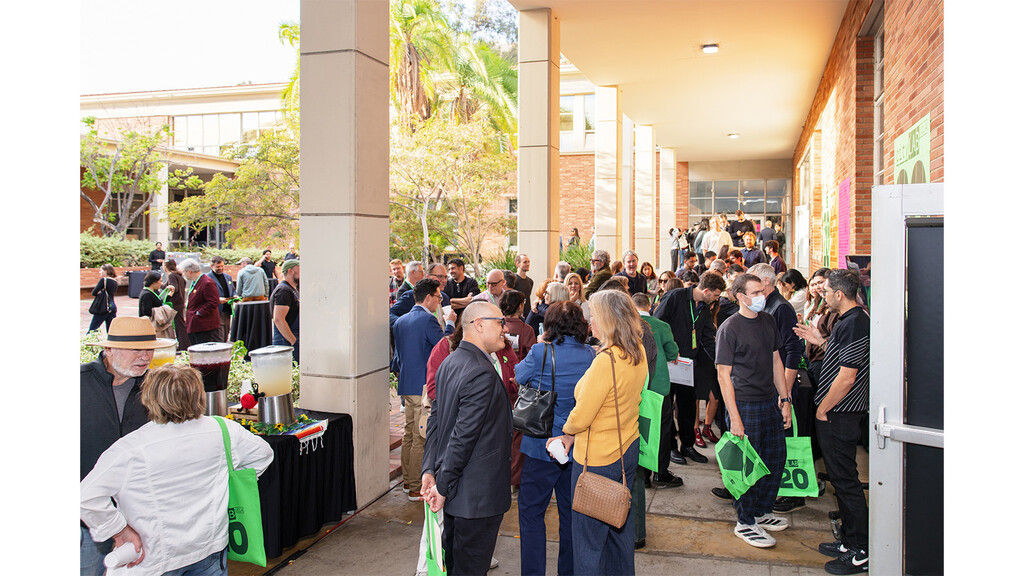
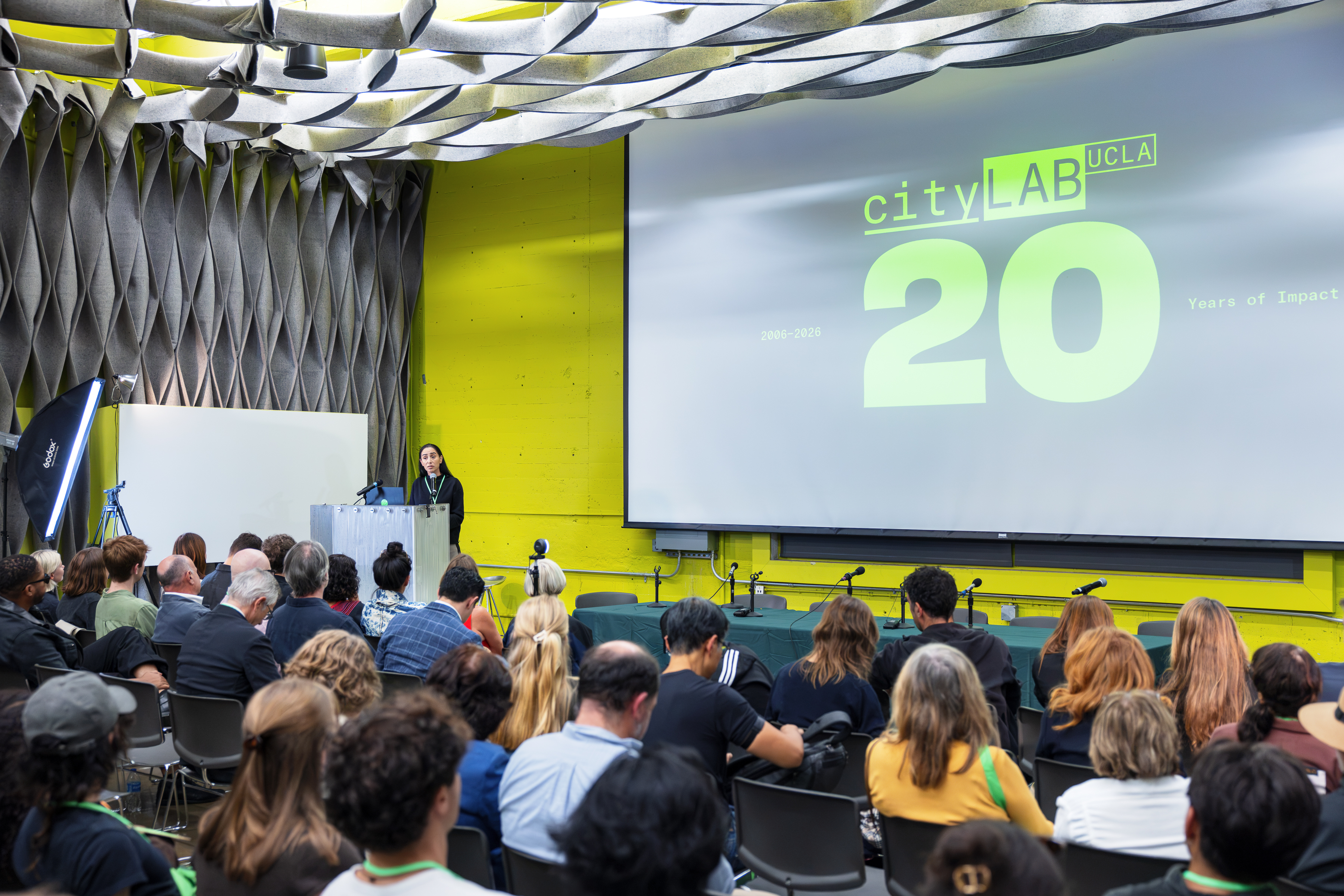
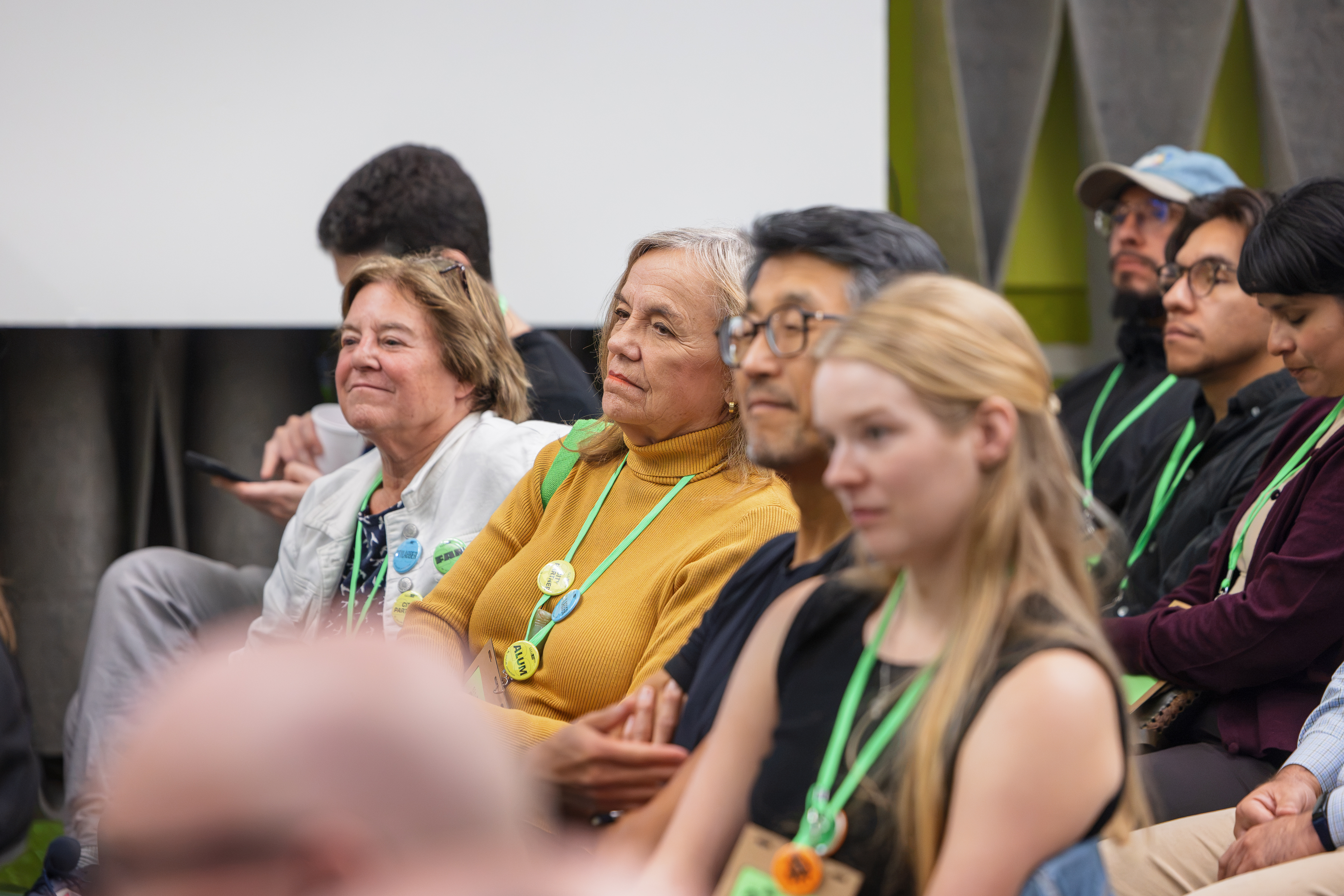
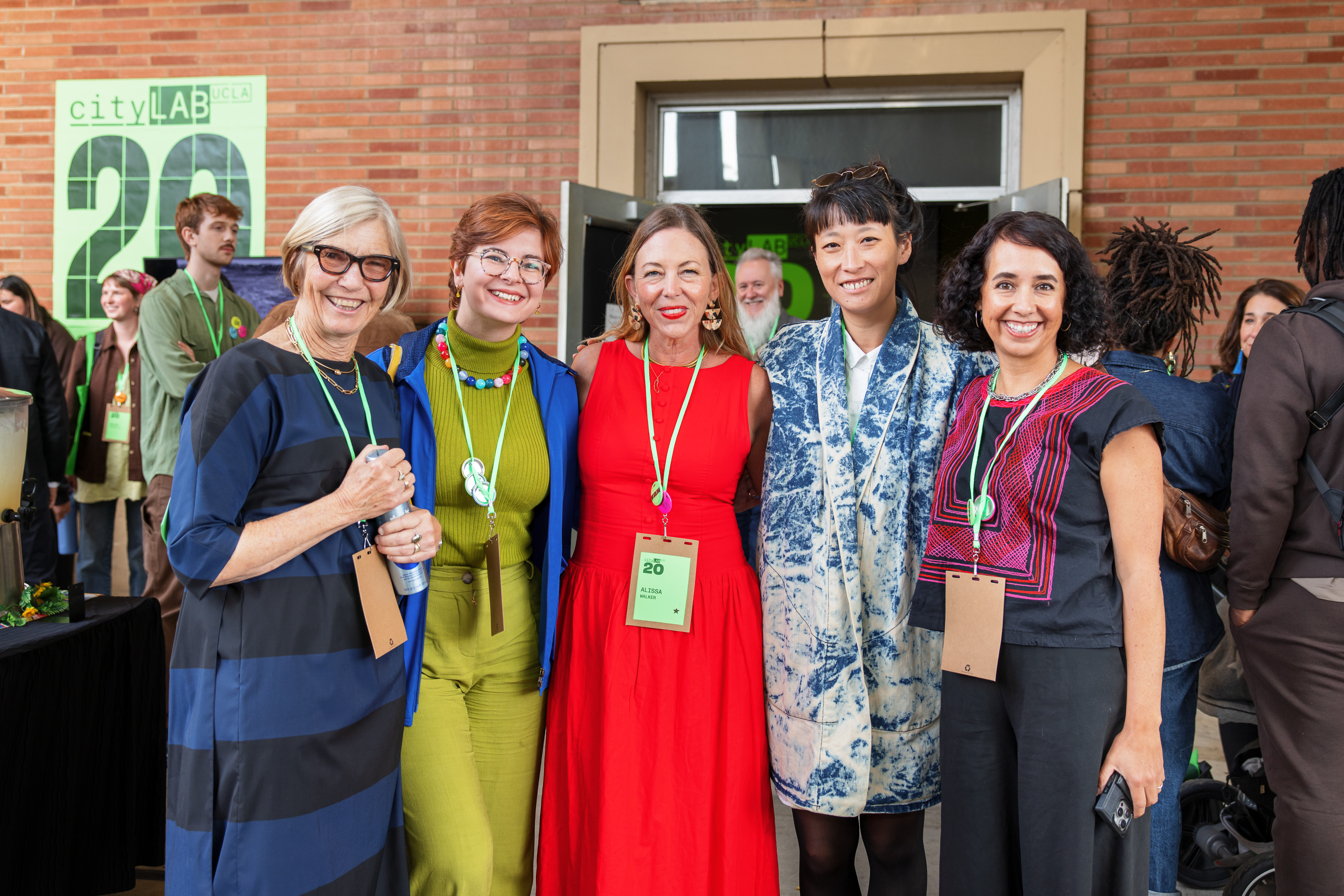
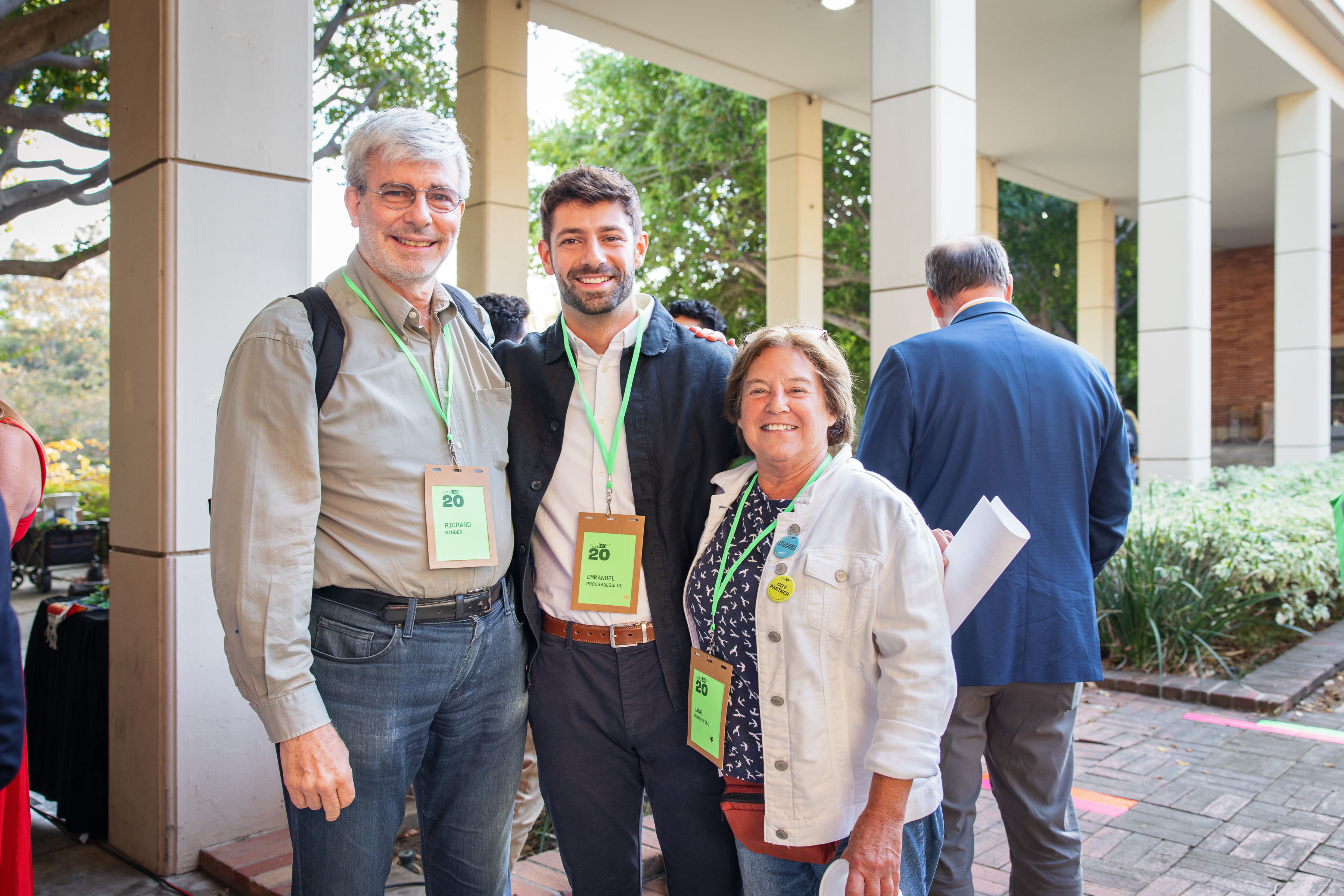
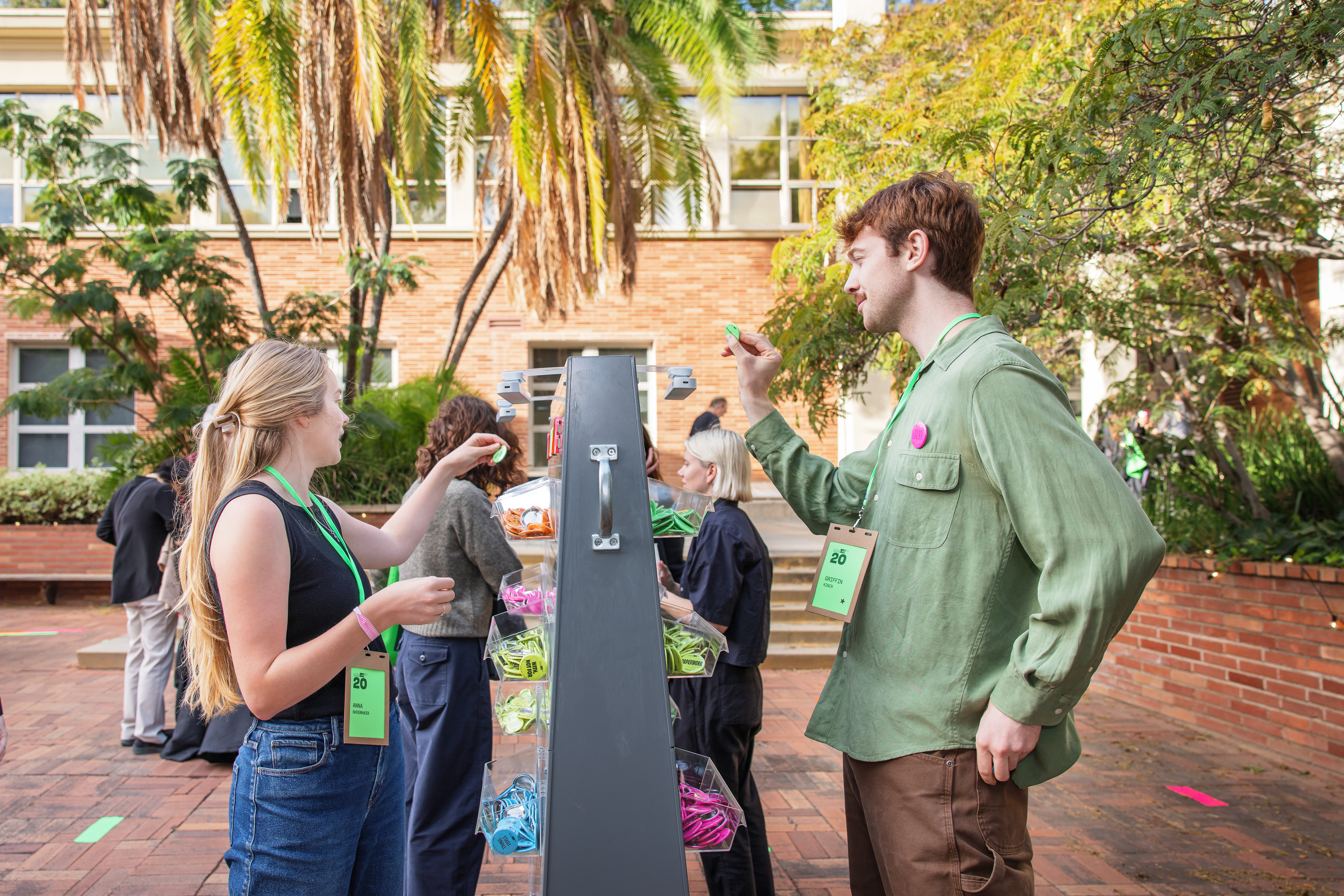
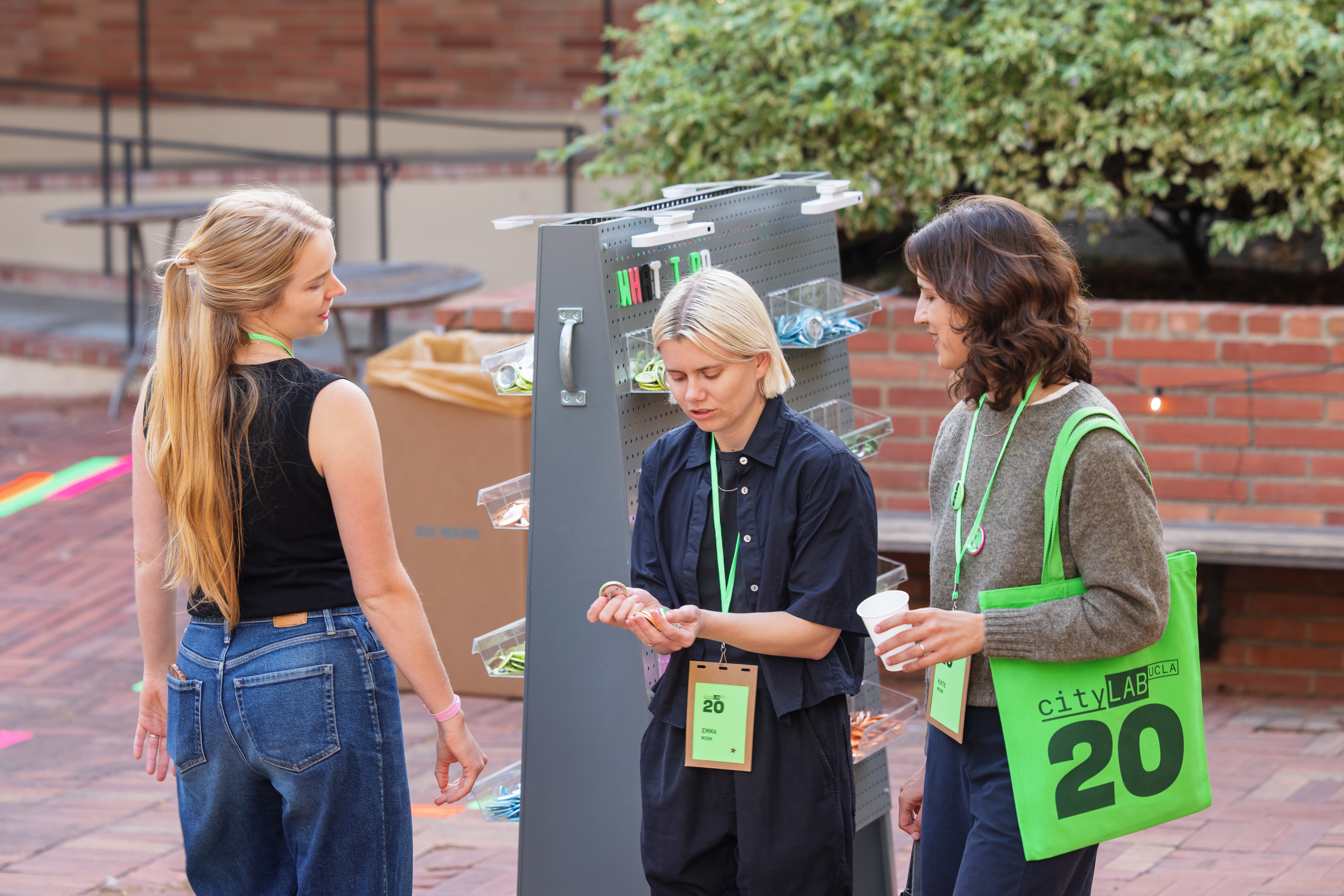
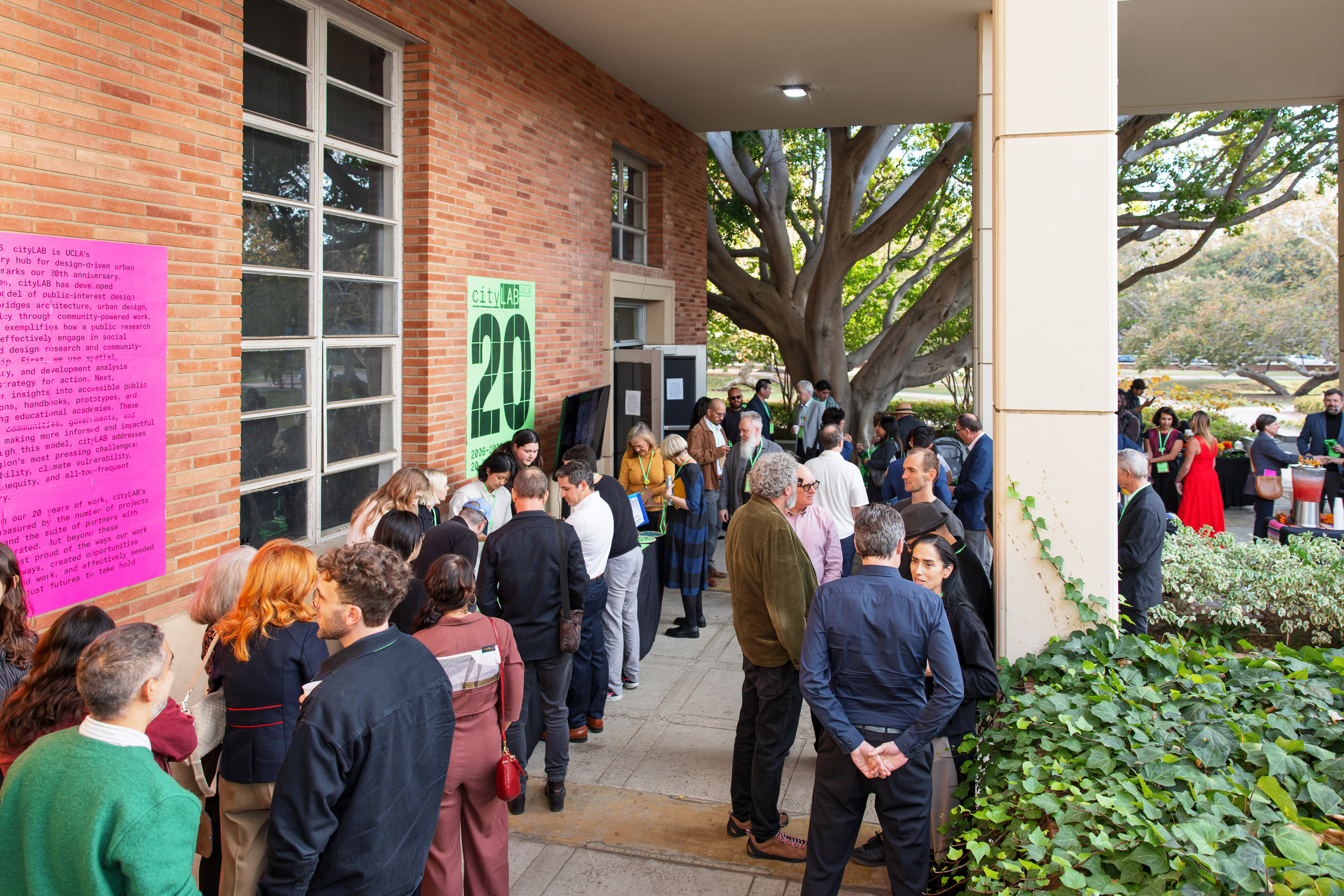
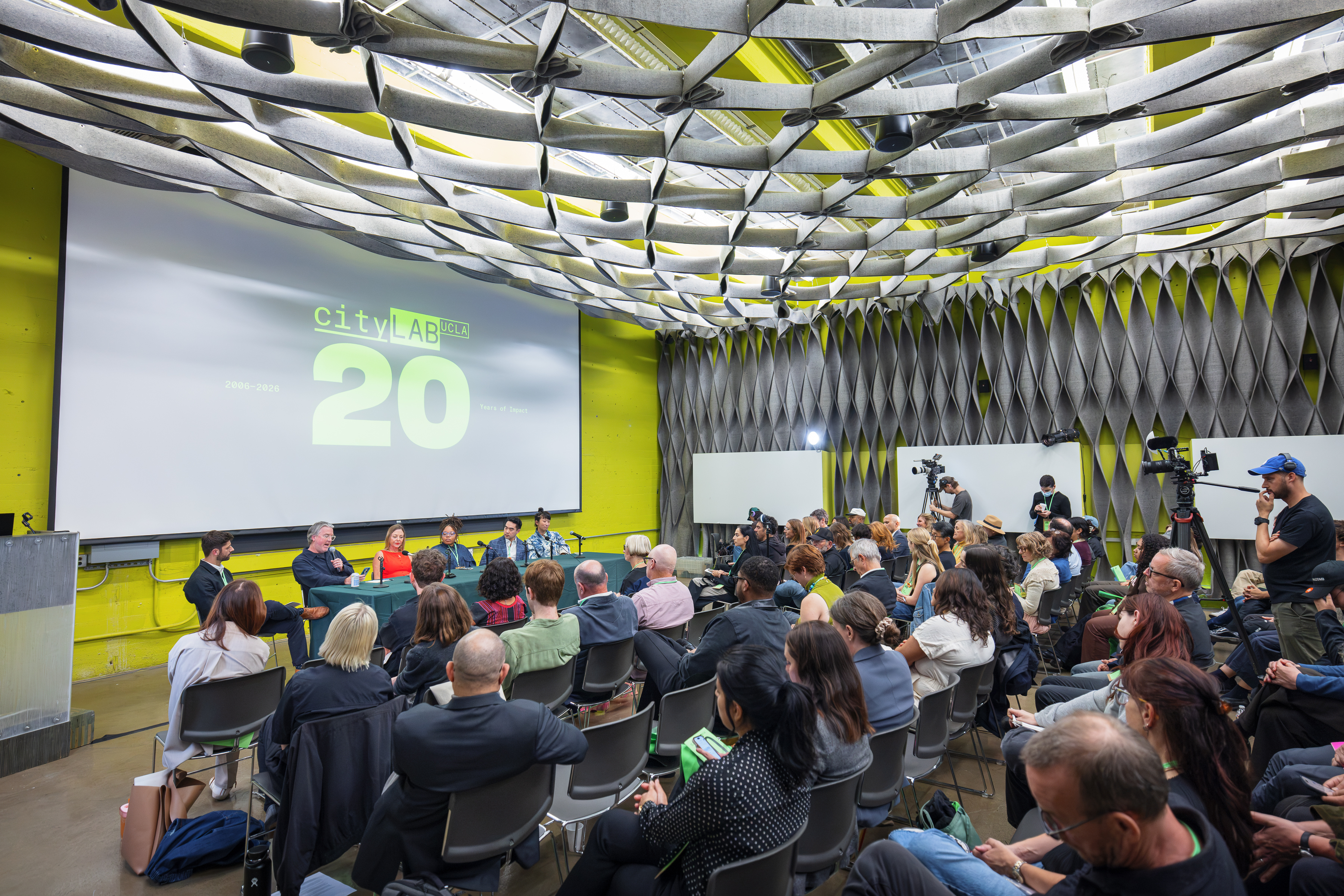
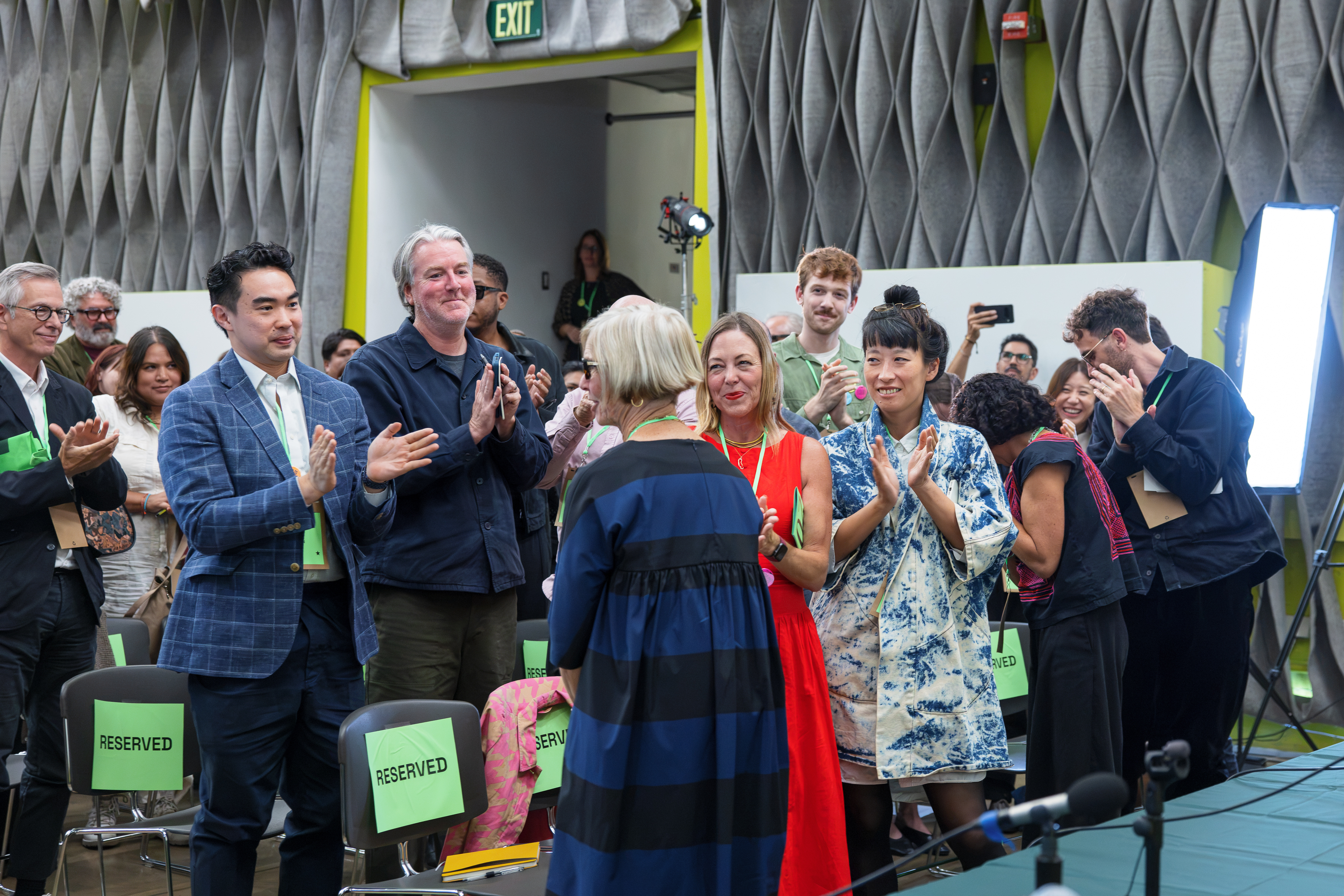
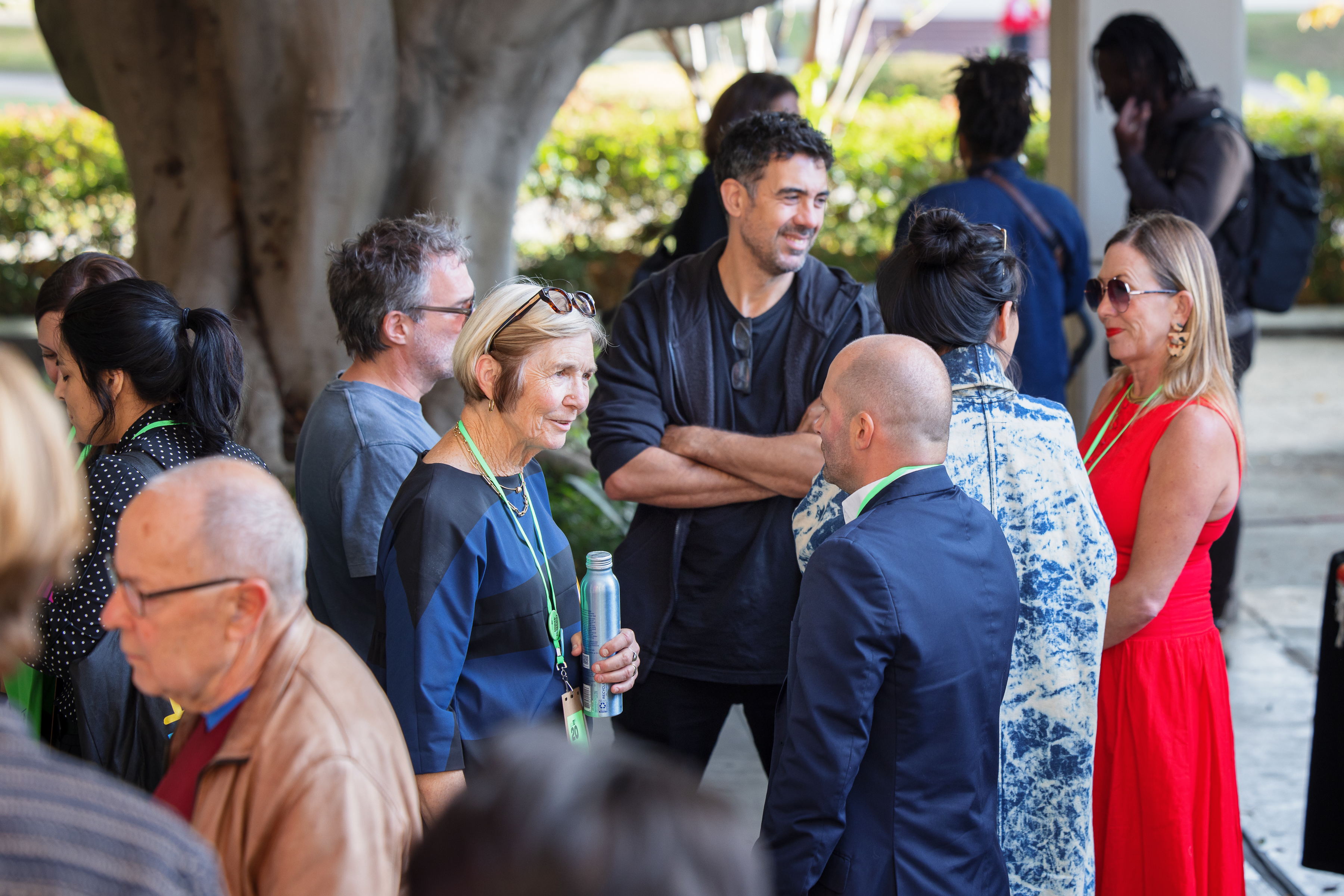
Twenty years after humble beginnings in Perloff Hall’s basement, cityLAB-UCLA has partnered with more than 30 civic and community organizations, published about 50 guidebooks and toolkits, and helped shape three California housing laws. On October 12, more than 200 guests convened in Perloff Hall for “cityLAB at 20,” an evening of panels reflecting on both the legacy and the process of this work, as well as cityLAB’s next chapter.
Lionel Popkin, dean of the UCLA School of the Arts and Architecture, opened the celebration by describing cityLAB’s unique approach to architecture as civic engagement: using design to produce tangible outcomes that advance spatial justice. Throughout its history, cityLAB has advanced the idea that architectural thinking can make new possibilities visible, while research and partnerships help translate those possibilities into legislation, development models, and built projects.
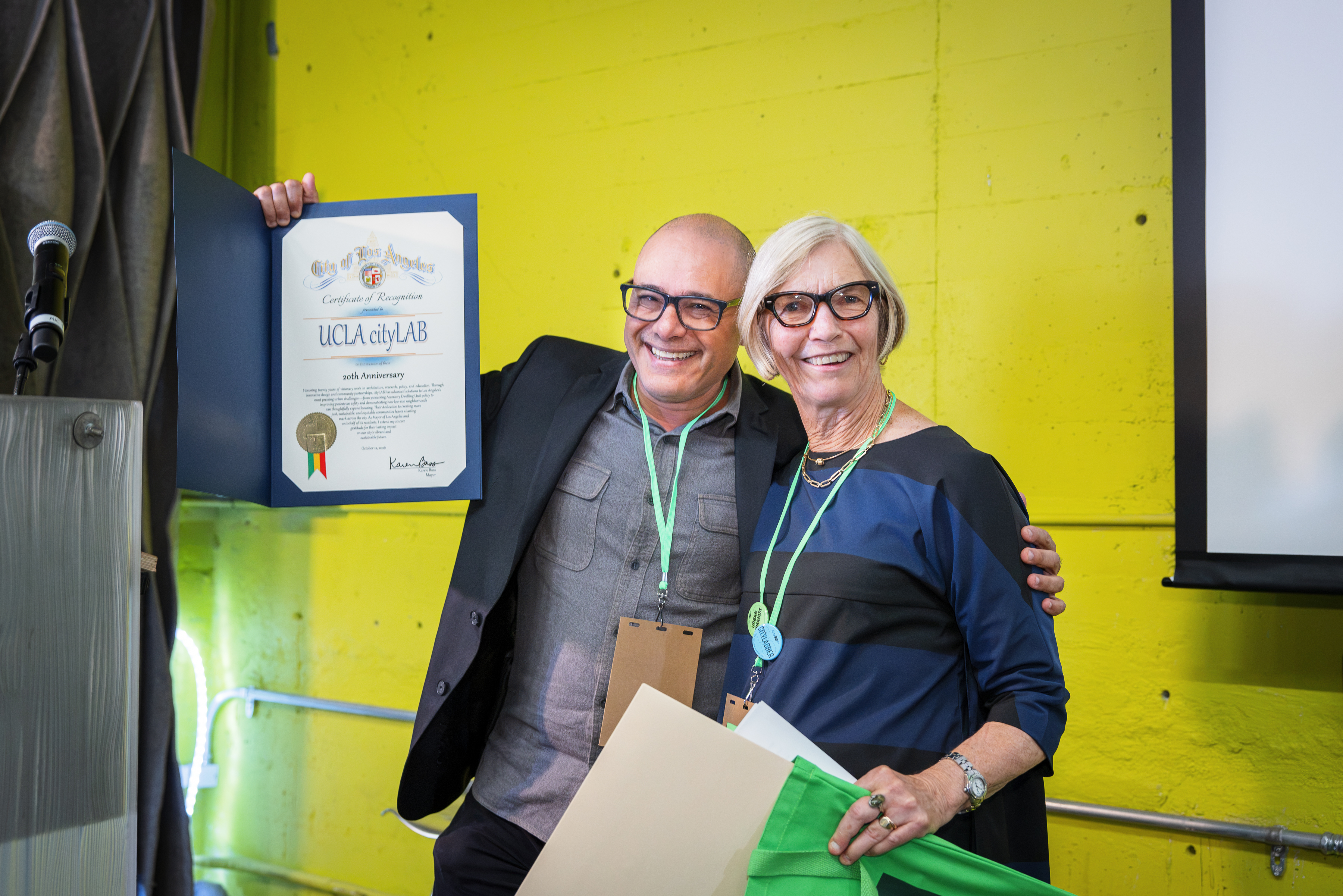
Popkin also presented cityLAB certificates of commendation from California State Senator Ben Allen, Assembly Member Rick Chavez Zbur, Supervisor Kathryn Barger, and Los Angeles Mayor Karen Bass.
“cityLAB believes in deep community partnership, and that collaborative research can then shape public policy,” Popkin said. “That work is emblematic of what I think needs to happen at a Research 1 institution. It's rigorous, it's joyous, and it's dynamic.”
From design research to housing policy
Founded by UCLA AUD Distinguished Professor Dana Cuff in 2006, cityLAB emerged from a conviction that, as Cuff noted in her evening remarks, architecture could not only respond to the needs of individual clients, but also change the systems that determine how cities are built and who gets to benefit from them.
“I've always believed that architecture is essential to making our world a better place,” Cuff said. “Architecture is so powerful that it must be shared not only with a privileged clientele, but with the public writ large.”
That belief has shaped cityLAB’s work on accessory dwelling units (ADUs), or small secondary homes built on existing residential properties. Through research, design proposals, and engagement with state and local government, the lab helped advance policies that expanded opportunities to build ADUs across California. Cuff cited approximately 100,000 permits issued under the initiative’s associated policy framework.
The lab is now extending its housing work to so-called “missing middle” housing: smaller-scale, multifamily, and starter-home options that can add density without relying exclusively on large apartment buildings.
Panelist Christopher Hawthorne, former Los Angeles Times architecture critic and former chief design officer for the City of Los Angeles, observed that cityLAB has helped fill a longstanding gap in the region’s civic life.
Los Angeles, he argued, has historically offered relatively few platforms for sustained discussion of architecture’s relationship to public space, urban planning, and civic identity. cityLAB has been “the great exception,” he said, bringing architectural expertise into conversations that might otherwise proceed without it.
In Los Angeles’s Westlake neighborhood, cityLAB has developed a sustained partnership with Heart of Los Angeles (HOLA), a nonprofit that provides no-charge after-school arts and education programs. Together, HOLA and cityLAB have explored how young people experience neighborhood streets, sidewalks, and parks, using community-based research to inform proposals for safer, more welcoming public spaces.
During the first of two panel conversations, HOLA Senior Creative Director Nara Hernandez described how the partnership has evolved from research into physical projects designed to make public spaces more inviting for neighborhood youth. The collaboration has also produced “Markings / Huellas,” a public art and oral history project documenting Indigenous histories and contemporary experiences in Westlake and Pico-Union.
Hernandez credited cityLAB with investing the time, students, staff, and resources needed to carry the work forward.
“They didn't come and go,” she said. “They stayed. They planted roots.”
A new generation takes the lead
After two decades, Cuff said, cityLAB is entering a new phase. She introduced Manos Proussaloglou and Yang Yang as the center’s new co-directors, describing the transition as an opportunity for fresh leadership at a moment of considerable momentum. Proussaloglou earned an MArch at AUD in 2023, while Yang earned a PhD in 2022; they each joined cityLAB just after their respective graduations.
For Yang, who has led cityLAB’s work in community engagement and public space, the continuity Hernandez described is essential. Community knowledge, Yang explained, can reshape research questions and reveal possibilities that design alone might not uncover.
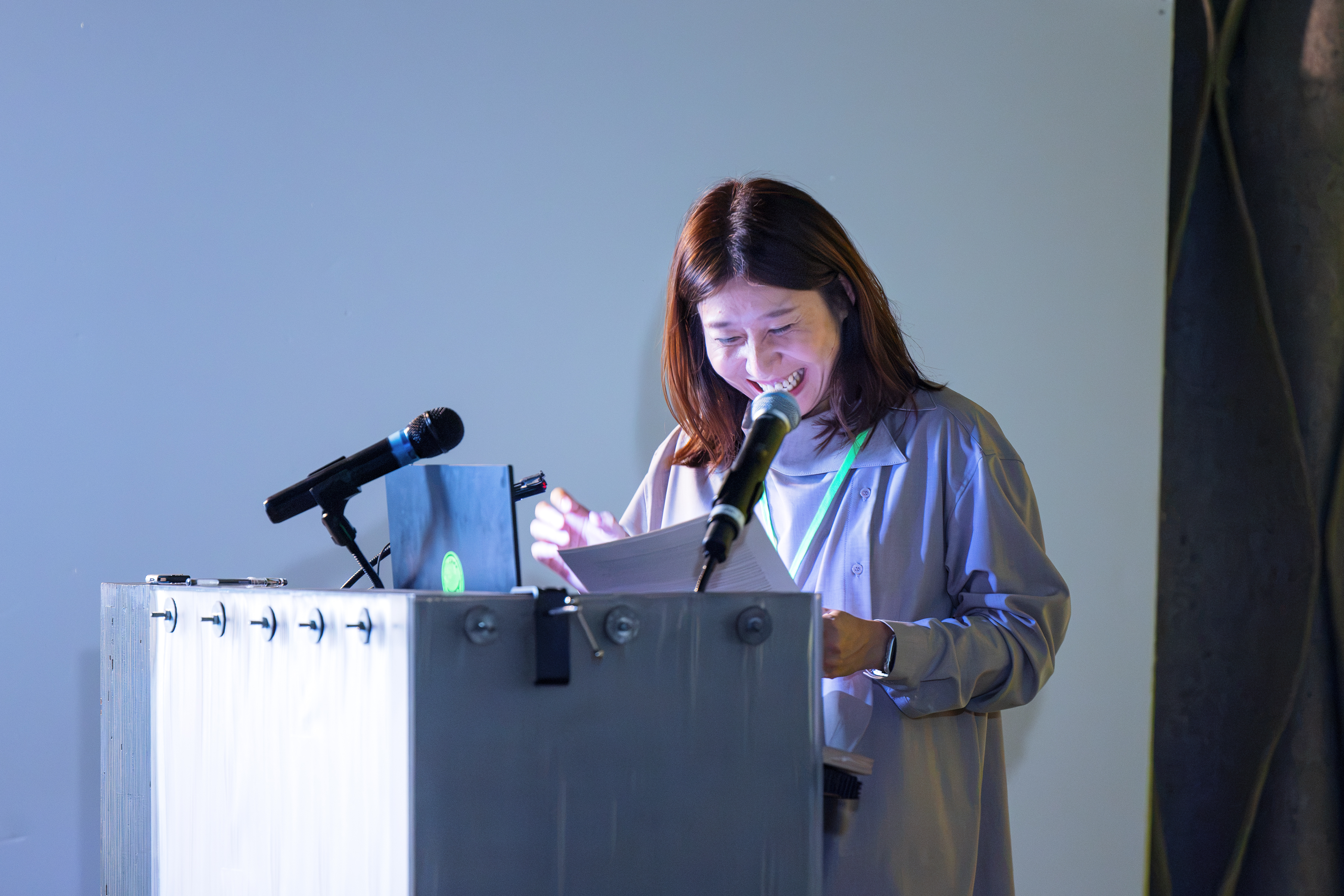
Proussaloglou, whose work has focused on housing research and policy, outlined a future that preserves cityLAB’s collaborative, design-driven approach while expanding its capacity to work across the financial, legislative, economic, and political systems that shape urban development.
Housing and public space will remain central priorities, he said. But he also sees an opportunity for cityLAB to expand its reach beyond UCLA, sharing its methods with other universities, research centers, and organizations.
“We want cityLAB to be the origin point for a constellation of urban centers,” he said, describing a network of research entities and cross-sector partnerships that could extend the lab’s influence.
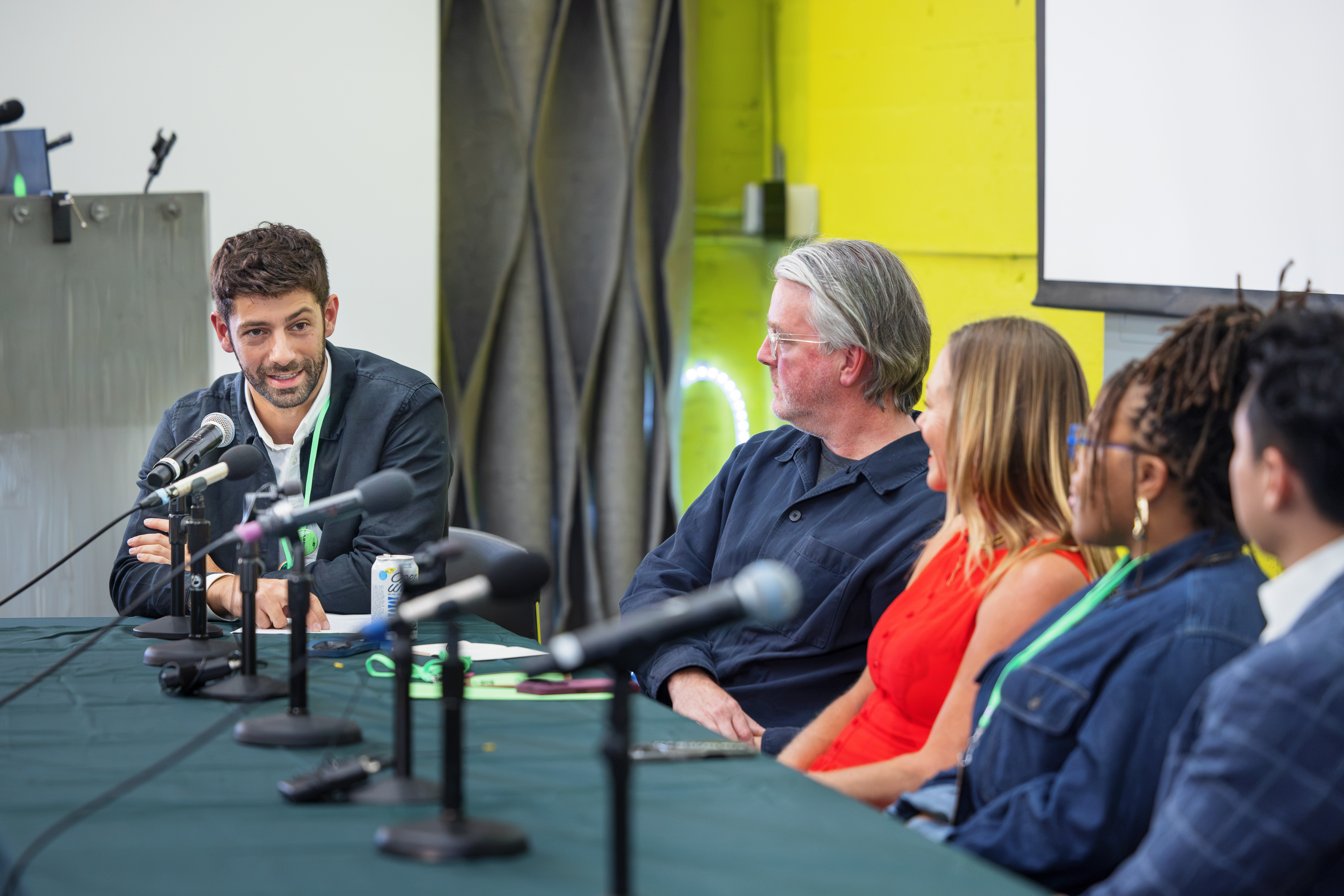
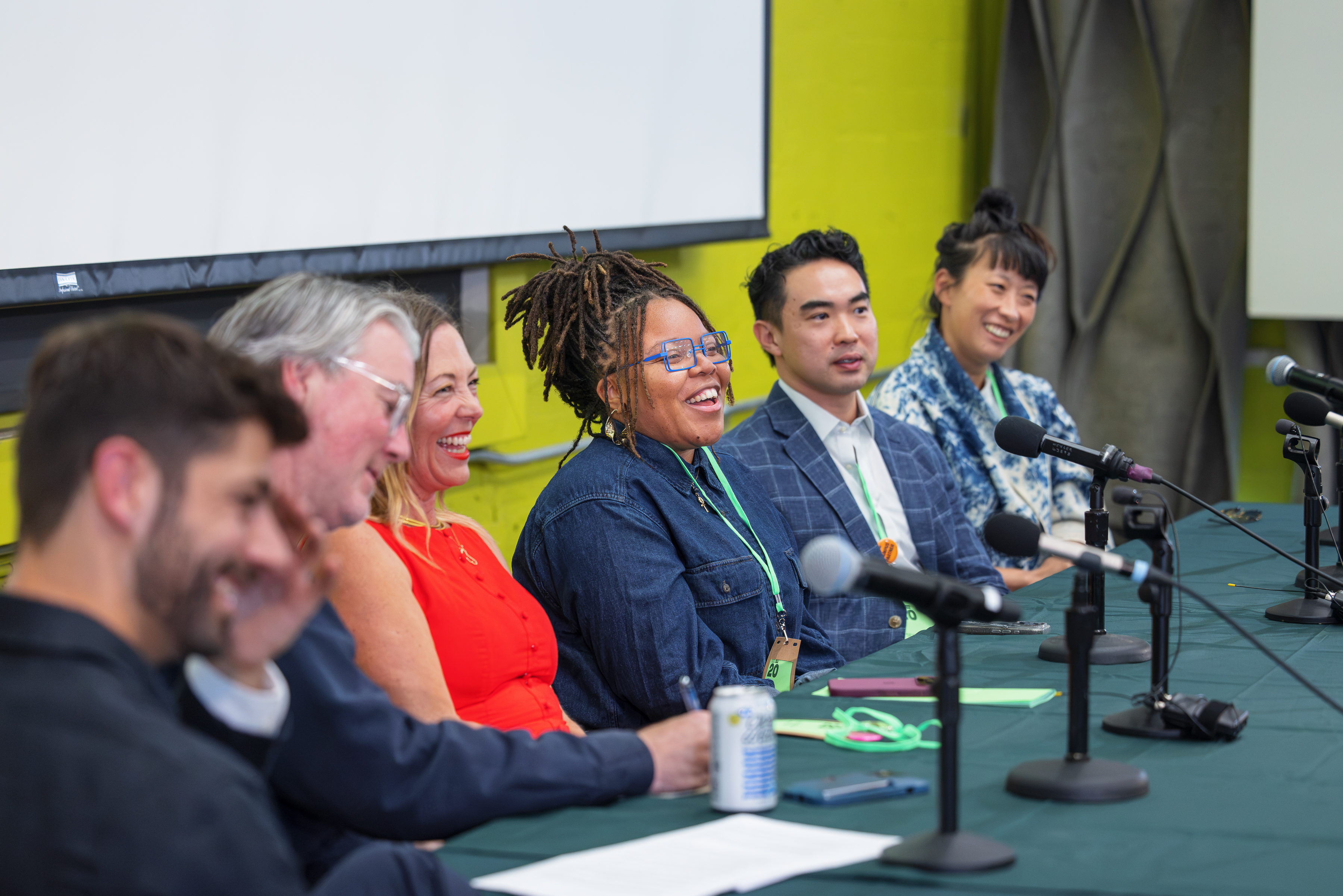
Proussaloglou moderated the evening’s second panel discussion, placing those ambitions in a broader context. Alissa Walker, a journalist who writes about transportation, housing, and public space in Los Angeles, encouraged cityLAB to pay greater attention to the everyday infrastructure that makes neighborhoods livable: shade trees, sidewalks, safe places for young people to gather, and the connections between buildings and public space.
With the 2028 Summer Olympics coming to Los Angeles, Walker noted, the city must think beyond short-term improvements and consider what kind of urban environment it wants to create for the decades ahead.
Mariana Ibañez, chair of UCLA Architecture and Urban Design, closed “cityLAB at 20” with reflections on what makes cityLAB distinctive: its ability to sustain relationships across institutions, public agencies, and communities, while connecting research to the processes through which ideas become real projects.
“cityLAB offers a very compelling model where research and practice are not necessarily separate activities,” she said, “where the production of knowledge is in itself a form of practice, particularly when it has the ambition and the capacity to change the conditions under which architecture is produced.”
Twenty years after Cuff and her collaborators began building cityLAB from offices in Perloff Hall’s basement, “cityLAB at 20” was both a celebration of that accumulated work and an invitation to imagine what comes next.
Yet, as the center enters its next chapter, its defining ambition remains the same: to demonstrate that architecture can do more than envision a better city: it can help make one.
“What we are celebrating today is much more than the longevity of an idea,” Ibañez observed. “We’re celebrating 20 years of work that has helped shape our city, our communities, our institutions.”
Related Faculty |
Dana Cuff |