Floresomatic
401
2026
Floresomatic
Work by Ceren Harputoglu (MSAUD ’26) + Anjana Ann George (MSAUD ’26) for “The Automated Abundance: Architecture Between Technology & Governance,” an MSAUD program/Architectural Intelligence Studio course led by Guvenc Ozel and Michael Peguero. The course investigates how architecture operates at the intersection of technology, media, and governance, treating housing as a critical site of transformation. Through artificial intelligence, automation, cyber-physical systems, narrative world-building, and prototyping, students developed speculative yet grounded proposals for collective living that respond to housing crises, climate change, and automation-driven economies.
"Floresomatic" was recognized with an Honorable Mention in the 2026 Advanced Architecture Contest organized by the Institute for Advanced Architecture of Catalonia (IAAC). The international competition calls for forward-looking proposals that rethink the future of cities and collective life through architecture, technology, ecology, and new social models. The project was developed with guidance from Guvenc Ozel and Michael Peguero, with additional support from Laure Michelon as it evolved into its competition submission.
Project Statement:
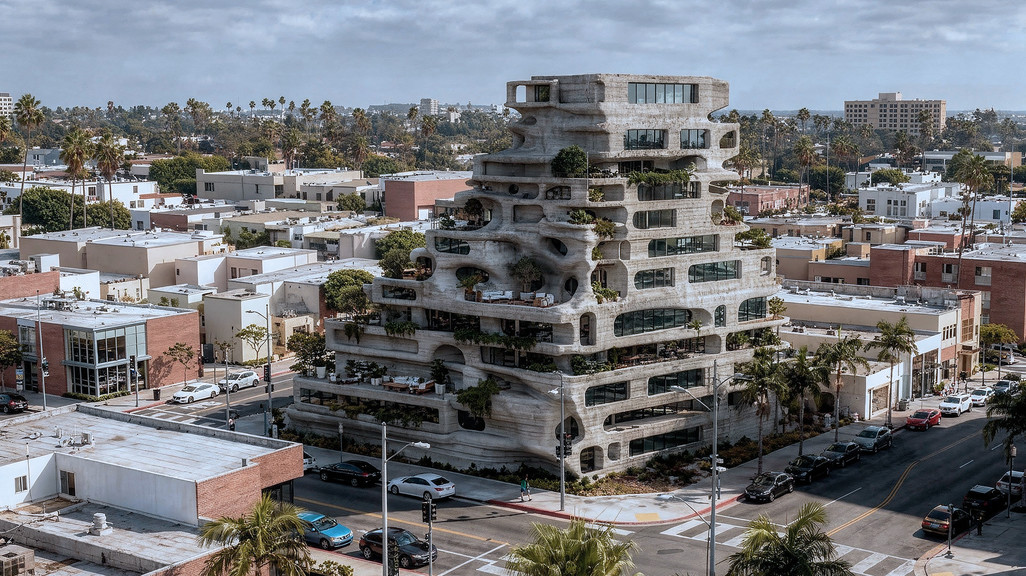
Floresomatic proposes a new housing paradigm in which digital intelligence, urban agriculture, and human experience are synthesized into a single cyber-physical architectural system. Developed in response to climate instability, social fragmentation, and ecological illiteracy, the project reconceptualizes housing not as a passive container or market-driven commodity, but as an active, living infrastructure that mediates relationships between humans, non-human systems, and technology. By positioning farming as a central spatial and social driver, the project reframes domestic space as a site of collective production, learning, and environmental awareness.
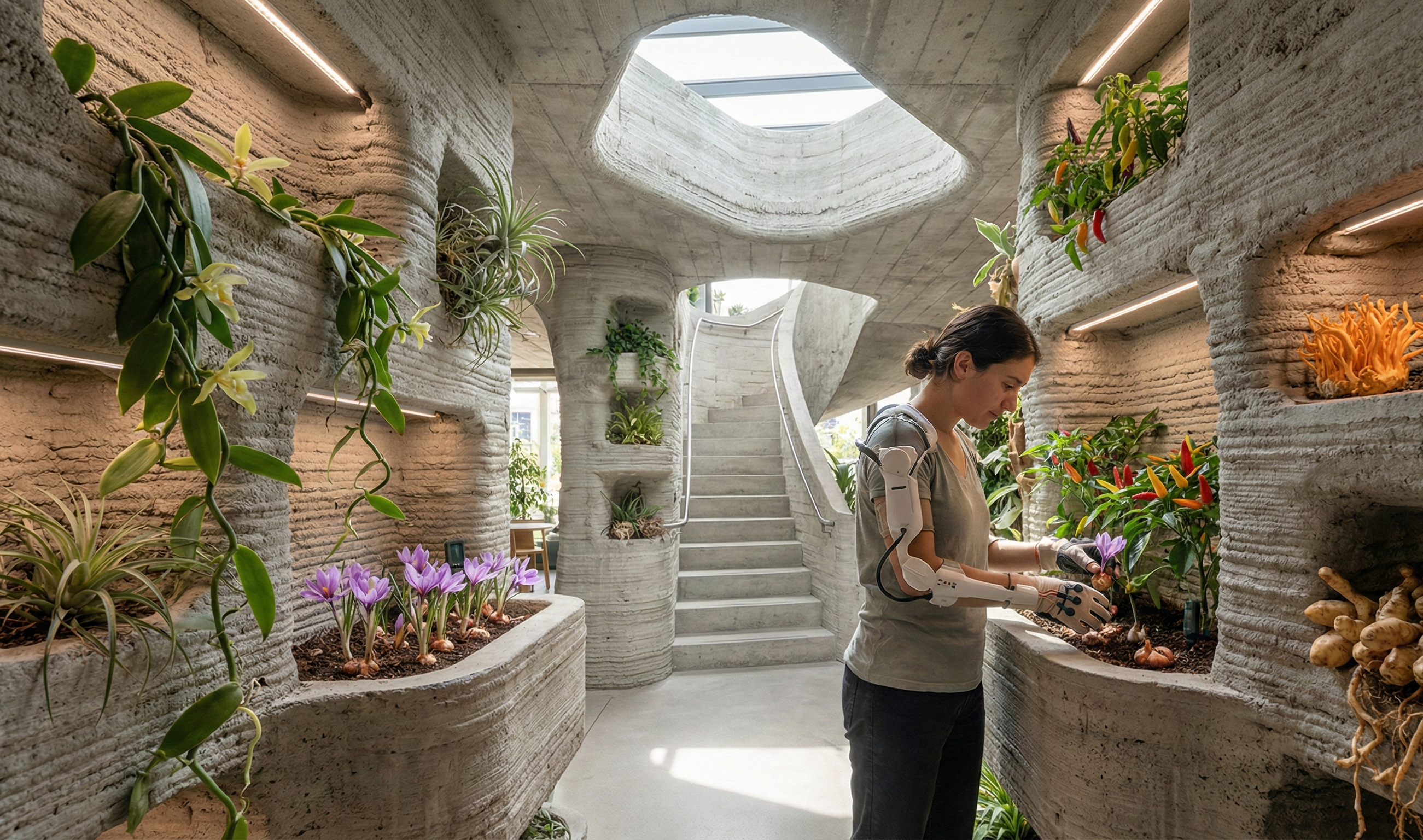
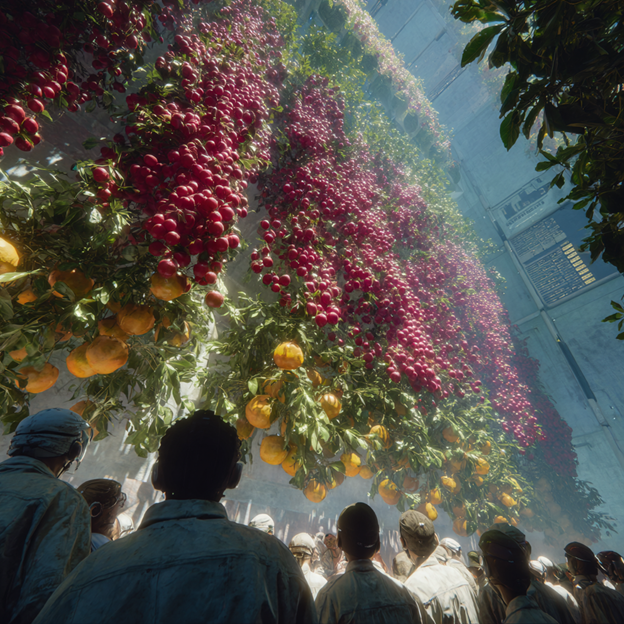
The project operates as a cyber-physical farming engine that integrates sensory feedback, embodiment, and spatial interaction. Residents engage directly with plant life through immersive environments where biological processes are translated into tactile and perceptual experiences. Digital systems are embedded within everyday routines, allowing ecological dynamics to be perceived through shifts in light, material, and atmosphere. This establishes a continuous feedback loop between human action and environmental response, reinforcing awareness of interdependence.

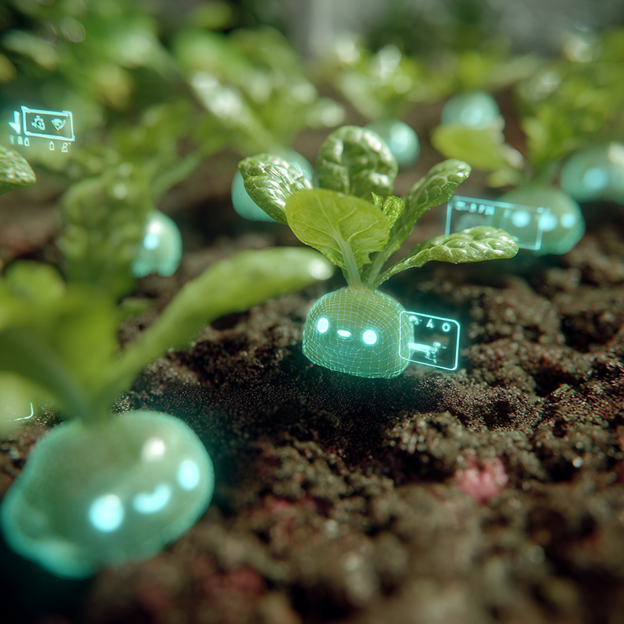

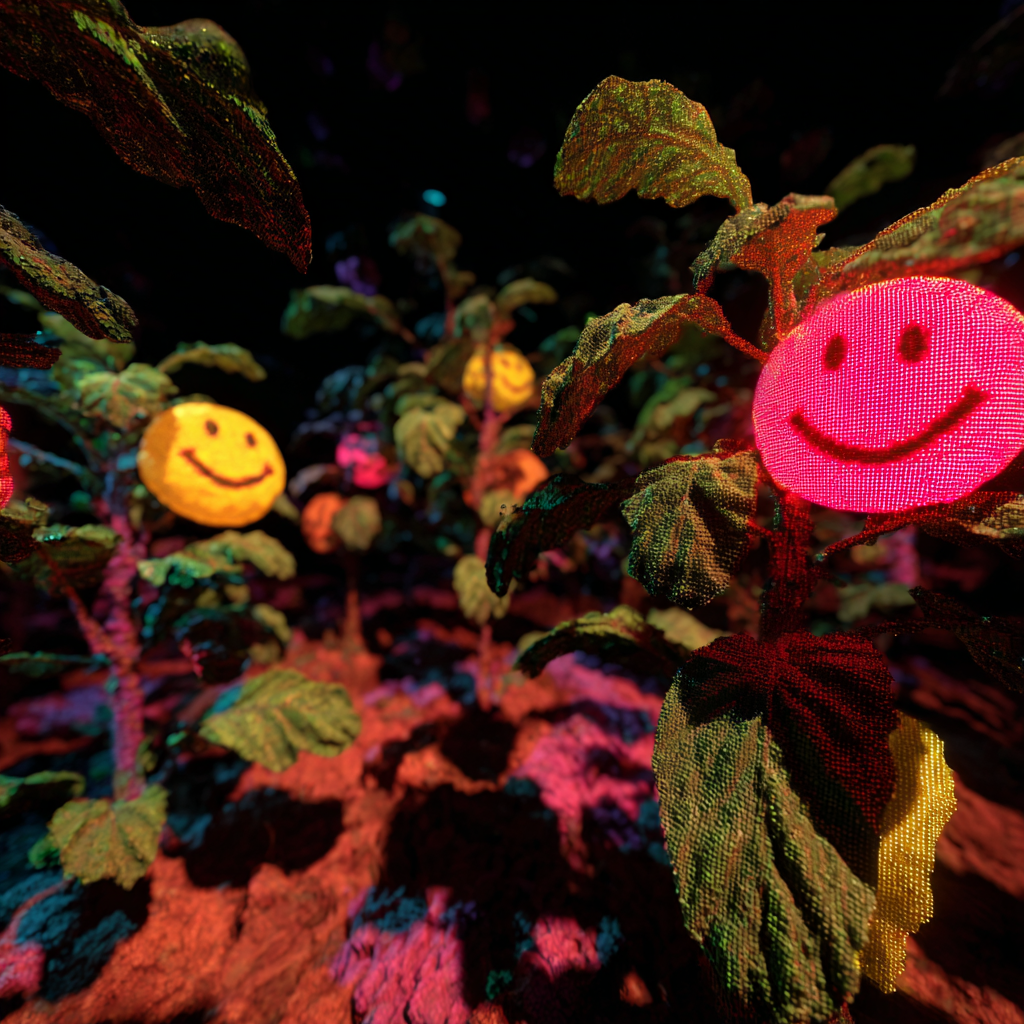
Domestic life is organized as a participatory ecological system structured through gamified interactions. Residents cultivate high-value plant species that function simultaneously as biological entities and augmented interfaces, prompting care, maintenance, and collaboration. Participation is incentivized through spatial, social, and economic rewards, including access to shared resources, reduced living costs, and expanded spatial privileges. In this way, housing becomes a collective metabolic process, where individual contributions directly shape environmental performance and community outcomes.
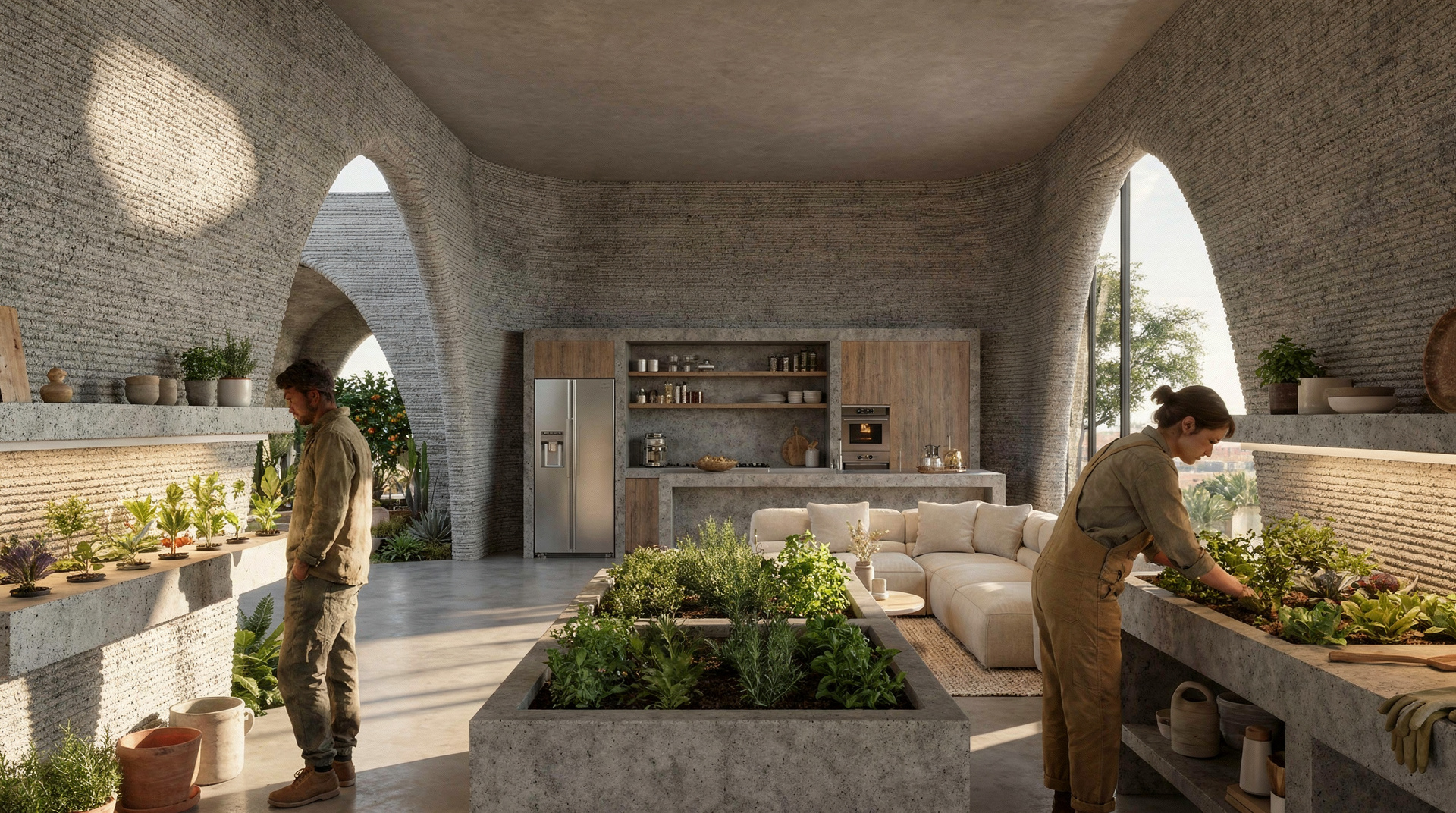
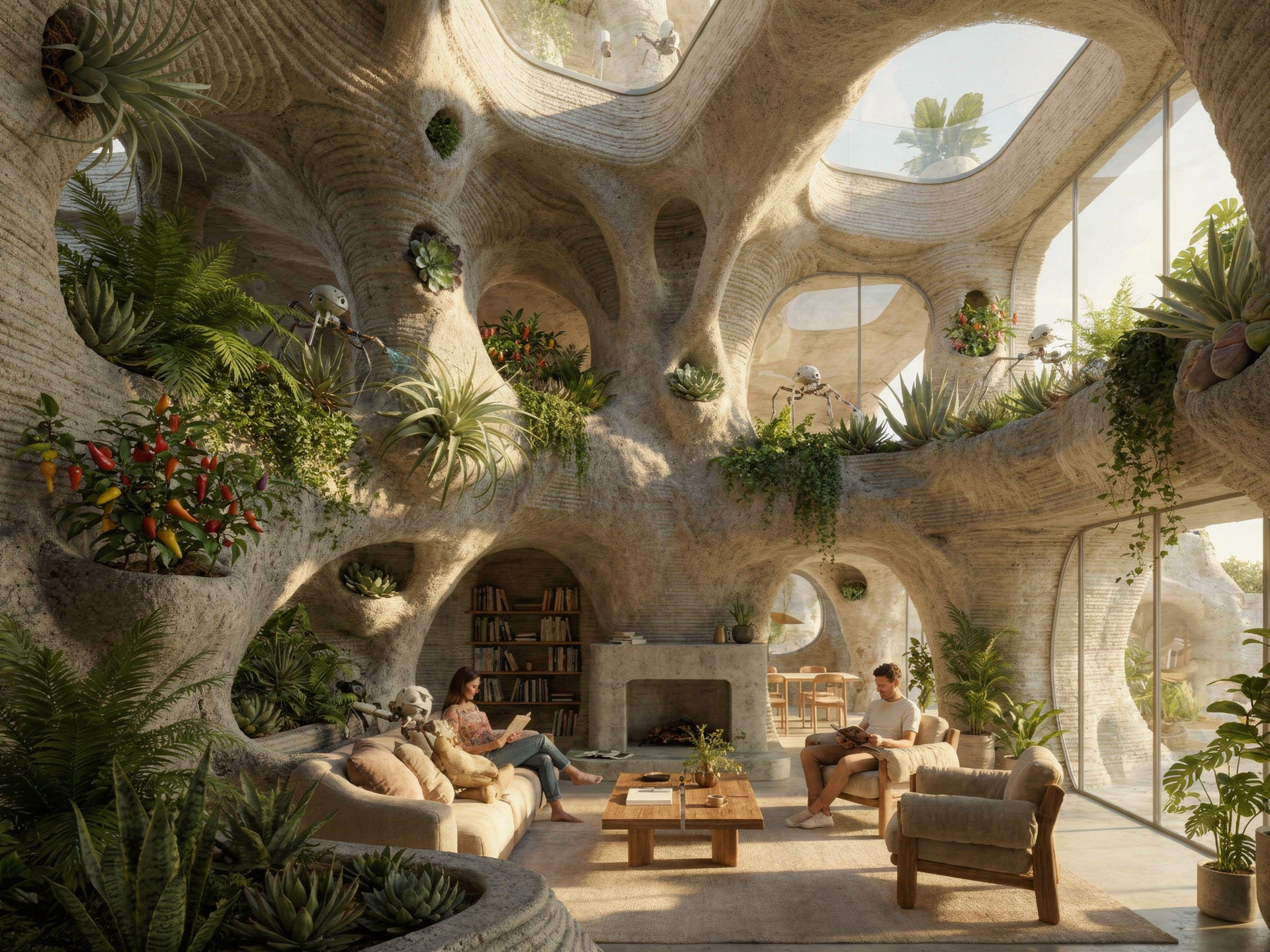
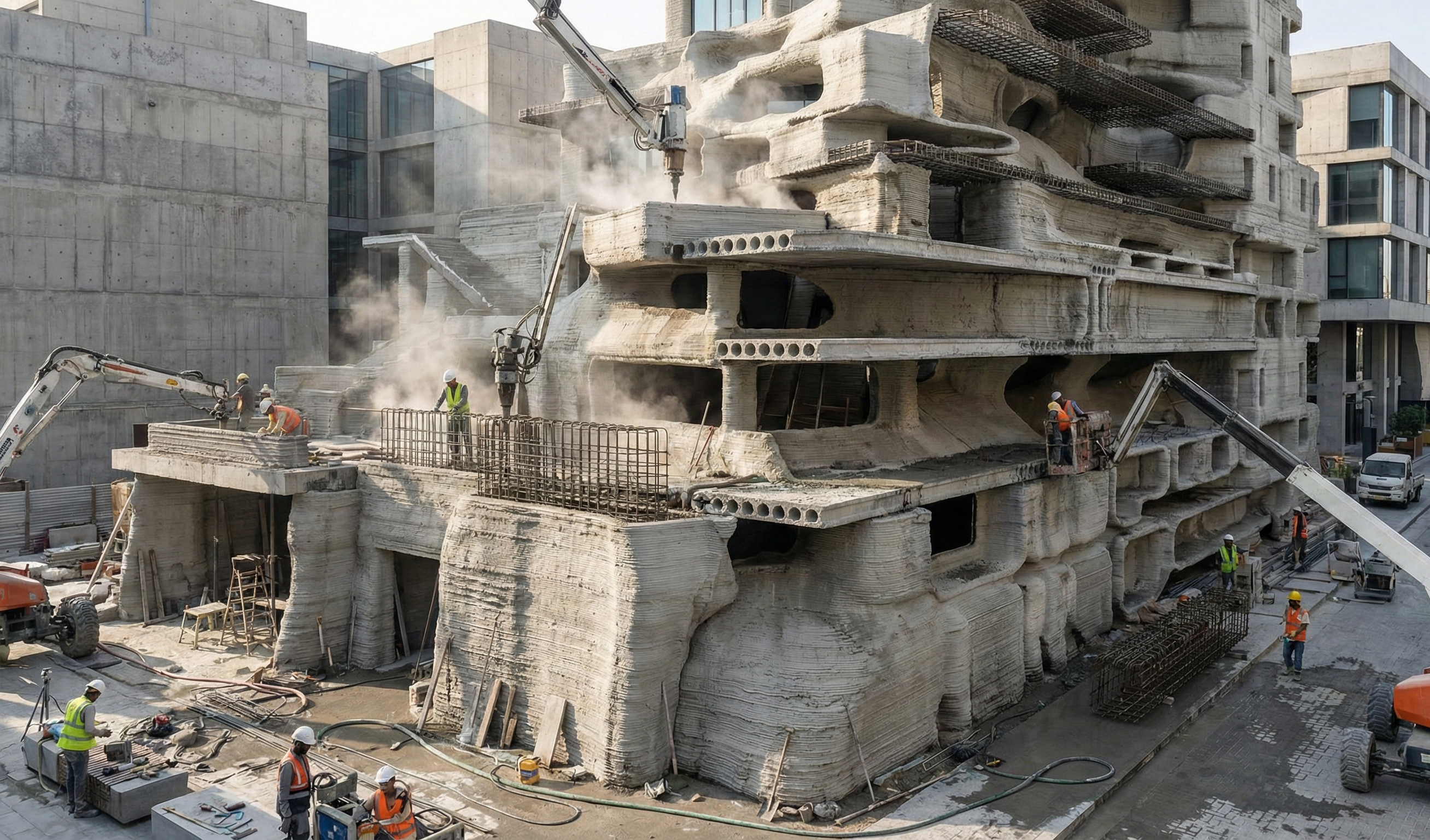
Floresomatic functions as a responsive architectural organism driven by embedded sensors, edge-based artificial intelligence, and robotic fabrication systems. Environmental data, plant health, and resident activity are continuously processed and translated into spatial and material adaptations, including dynamic surfaces, responsive atmospheres, and reconfigurable circulation. The building is capable of incremental growth through robotic 3D-printing processes utilizing recycled organic material, positioning architecture as an evolving system that expands and transforms through collective participation rather than remaining static over time.
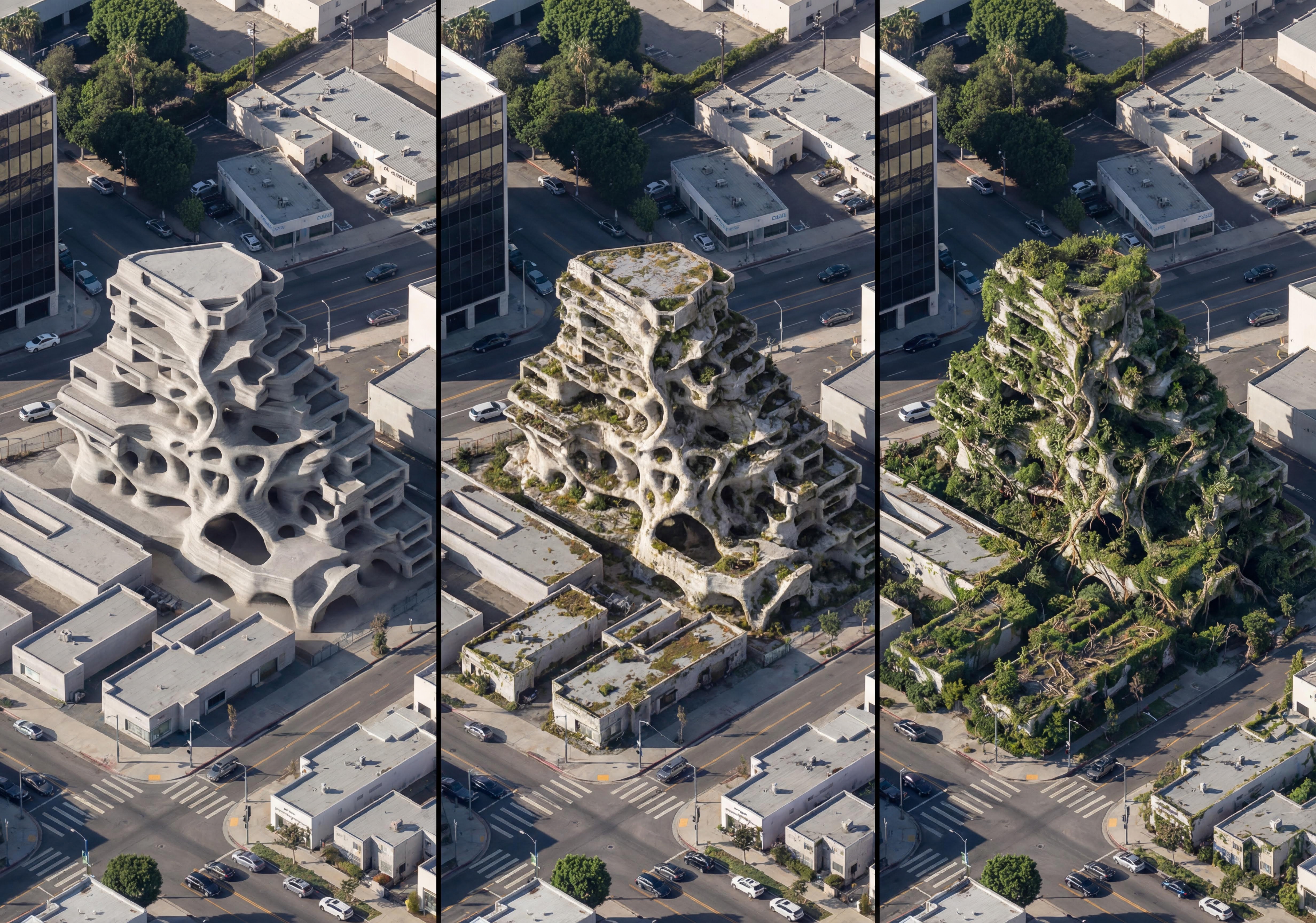
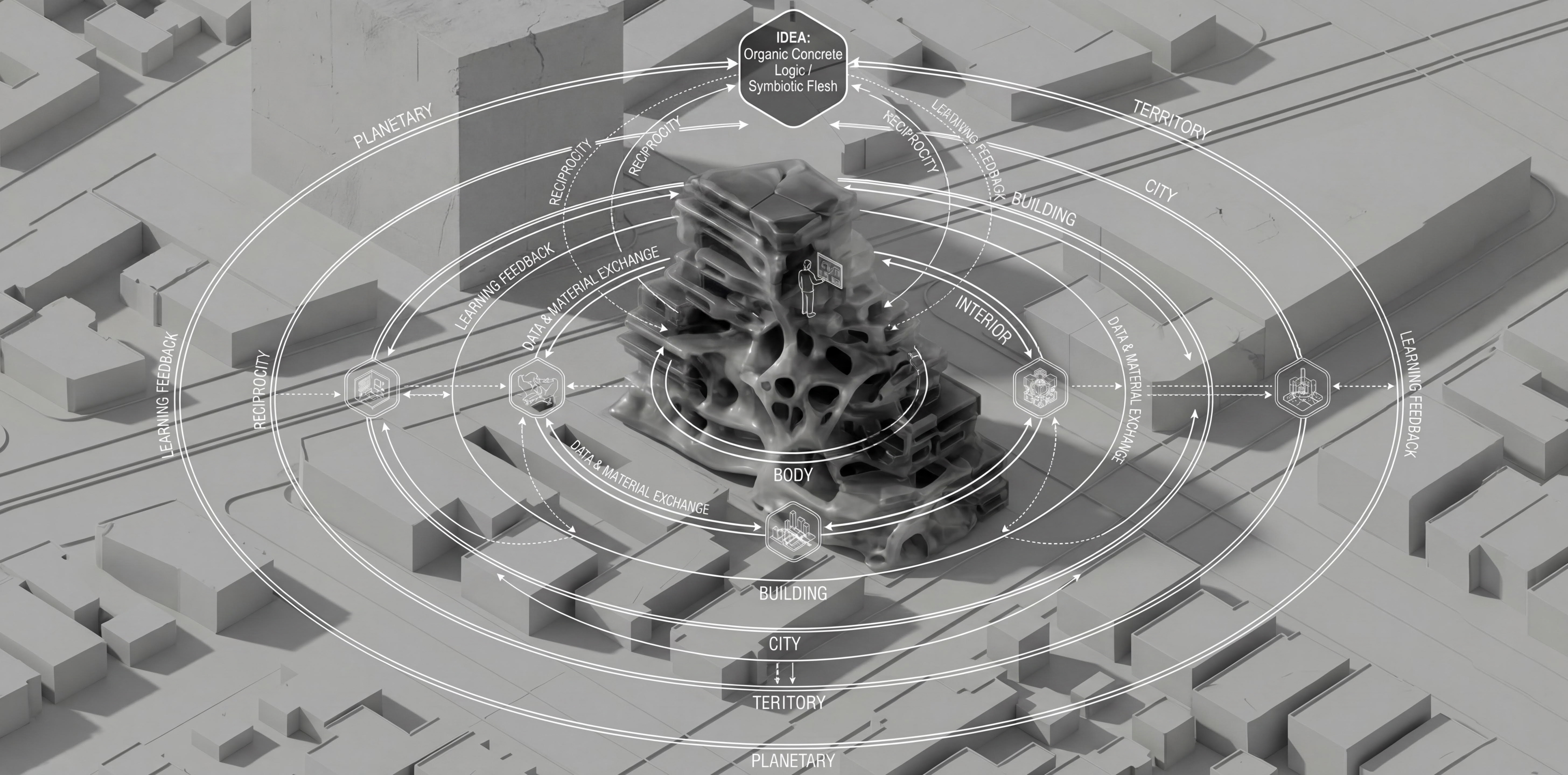
At the urban scale, the project extends into a distributed network of interconnected housing systems that operate through localized, non-extractive data infrastructures. Intelligence is processed through edge computing, ensuring transparency, privacy, and user control, while residents retain agency in shaping spatial and systemic outcomes through participatory governance mechanisms. This establishes a model of urban infrastructure in which technological systems support collective decision-making and equitable access, rather than reinforcing centralized control or data-driven exploitation.
At broader territorial and planetary scales, these systems form an interconnected ecological network that exchanges data, resources, and environmental intelligence. Through this continuous feedback, architecture becomes a living system that learns from its inhabitants while contributing to larger cycles of regeneration and adaptation. The project ultimately positions housing as an active participant in planetary systems, cultivating ecological awareness and new forms of collective responsibility across scales.
The Automated Abundance: Architecture Between Technology & Governance
2025–26 MSAUD Advanced Topics Studio instructed by Guvenc Ozel
The Automated Abundance: Architecture Between Technology & Governance studio investigates how architecture operates at the intersection of technology, media, and governance, with a particular focus on housing as a critical site of transformation. Through the lens of artificial intelligence, automation, and cyber-physical systems, the studio challenges conventional notions of buildings as static objects, instead framing them as adaptive, intelligent environments shaped by data, robotics, and human interaction. Students explore how architecture mediates between utopian technological ambitions and real socio-political conditions such as housing crises, climate change, and automation-driven economies, developing speculative yet grounded proposals for multi-unit housing that integrates human and machine life. By combining narrative world-building, advanced digital tools, and physical prototyping, the studio positions architecture as an active system of invention—one that constructs new forms of collective living, redefines domestic space, and proposes future models of abundance, resilience, and shared life.
Related Faculty |
Güvenç Özel, Michael Peguero, Laure Michelon |

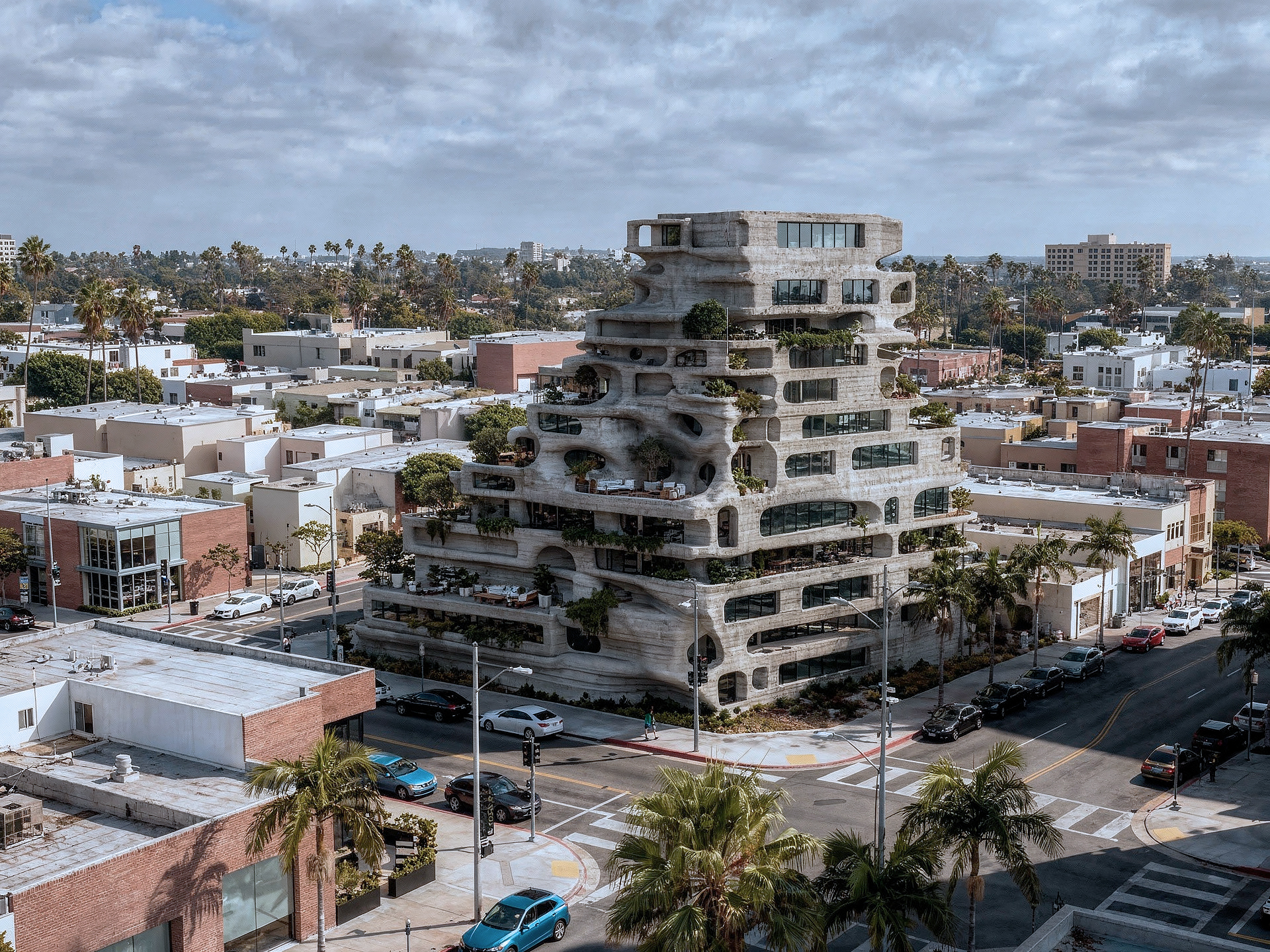
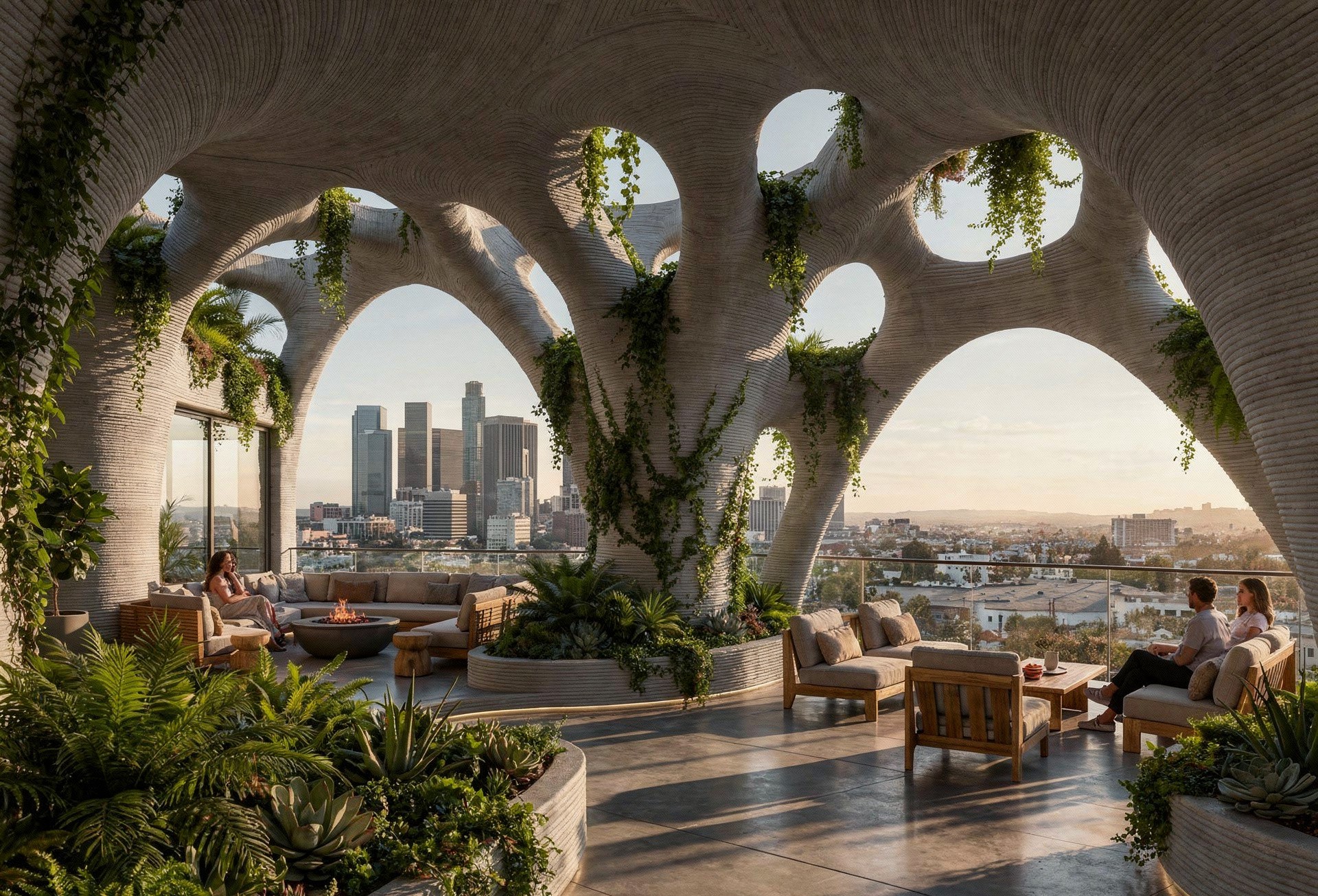
- Material Render
- Construction Visualization
- Farming Environment
- Cyber-Physical Environment 01
- Cyber-Physical Environment 02
- Cyber-Physical Environment 03
- Cyber-Physical Environment 04
- Axonometric view
- Middle Exposure Unit
- Event + Social Space
- High Exposure Unit
- Contemporary Farming
- Evolcing Infrastructure
- Scalar Interconnection